
A history by DeMarco Jenkins
The Tash’ita
In the Name of Our Gods
Continue to Foundations John Martin · The Great Day of His Wrath, 1851–53
A history by DeMarco Jenkins
In the Name of Our Gods

Book One · Foundations
“Before there was anything, there was Uriah, and he was alone.”

Book Twelve · Acts
The Vicar of the East calls the houses of Uriah together to make one faith out of many. He makes two.
A reader’s guide
DeMarco Jenkins’s four-volume imagined history follows the faith of Uriah from creation to the people who inherit it. Its fourteen books tell that history through letters, testimony, ledgers, and the notes of a compiler working from copies that sometimes disagree.
You can begin with Uriah alone in the Point, or meet the scribes of Meroe through the eyes of a traveller. Each illustrated passage names its volume and page so you can find your way back to the book.
Both views include the passages, artwork, and inscription transcripts. The initial view follows your device’s reduced-motion setting.
The collected history
From Uriah alone in the Point to the council at Antioch, fourteen books trace a faith through the lives of its gods, rulers and witnesses.
Where to buy
Where to buy
Where to buy
Where to buy

Meroe · About 55 BCE
Seth has come upriver to find the people who wrote his life in a language he could not read.

The Day of Tongues
Wosarite looks at his bow. Akhrawe asks his name. Somewhere beyond the blue-glazed door, a scholar has a book about him.

The Day of Tongues
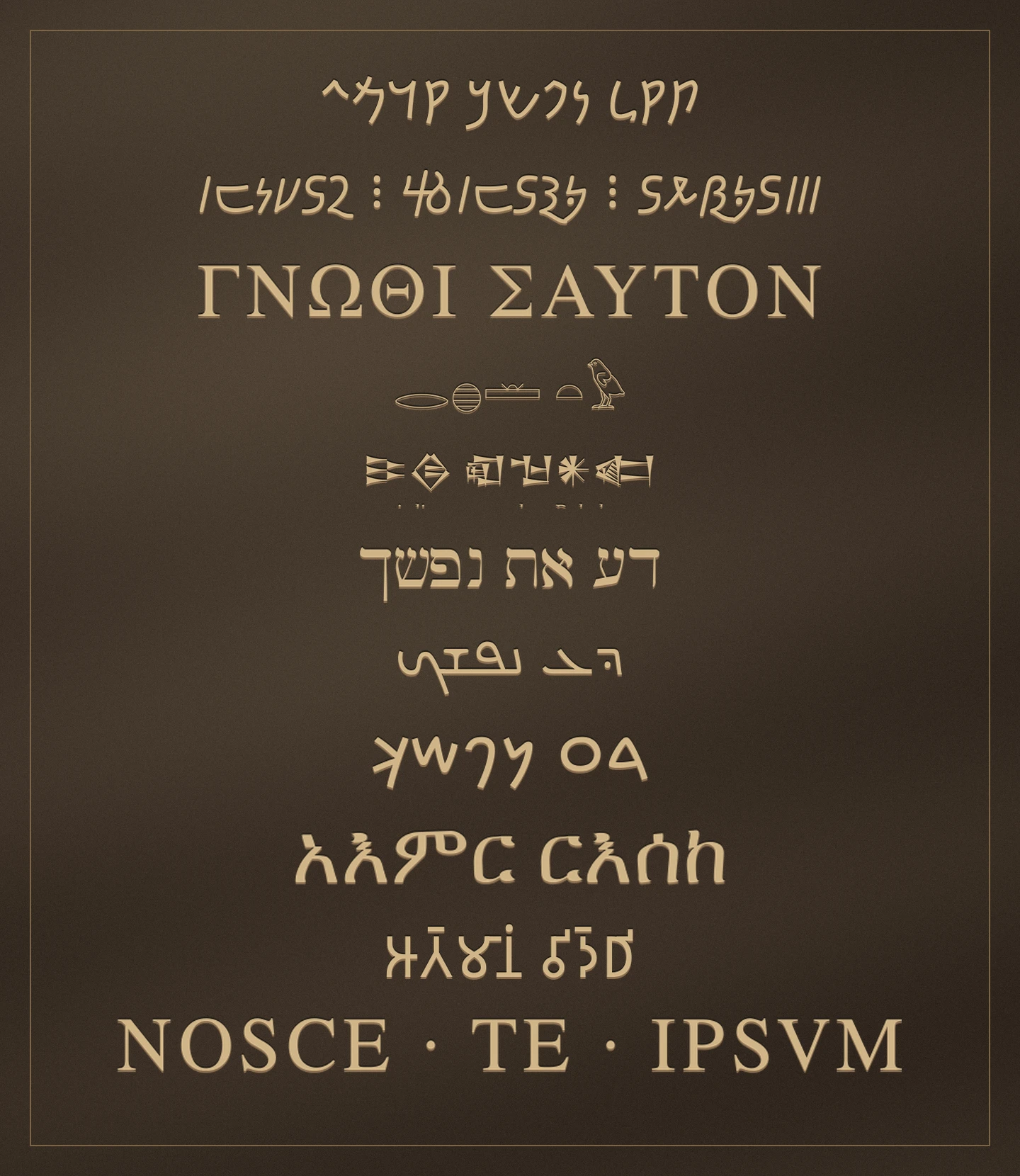
After dark, Wosarite leads Seth to the wall by the gate. She raises a lamp. One tongue stands beneath another, down to the height of his knee.
Mes’aita II · Letters, pp. 103–104
At the head is the saying of the ford in the Aramaic of the hills. Beneath it, the House has gathered ten more forms. Seth remembers Wosarite saying, “They have all cut it over their own doors. We only cut them in one place.”
In the compiler’s account, the Greek, Latin and Indian forms were used by those peoples. The House supplied the others. The compiler gives the Kushite line by its place among the sayings and records that its precise sense is unknown.
Inscriptions at the landing, gate and within the House · pp. 91–92.
At Alexandria a trader tells Seth that someone in Meroe has set down the war of the Giants in the speech of Kush. Below the palace he finds a landing for caravans of books. The Keeper, Wosarite, looks at his bow. At the gate Akhrawe gives his own name, asks Seth’s, and opens the door. The House already has a book about him.
Raphael’s philosophers gather under a painted vault. In Seth’s account the court is smaller, the columns are red, yellow and blue, and scholars from many traditions sit on the floor. The compiler singles out the man at the foot of the steps who keeps writing through the noise.
Every room had a long table, and on every table the same thing: a book of that tongue, and beside it the same book being written into the speech of Kush, line by line, in the new letters. They said it would take them a thousand years. They had been at it a hundred and fifty, and were cheerful about it.
Mes’aita II · Book Nine, p. 92, verse 9
An old scholar reads Seth the account of the young bowman of Jude, in Greek. The account is right. Seth sits down on the floor. Akhrawe brings him water and lets him sit in silence.
Seth’s visit · pp. 90–93
Batraita · Meroe, about 350 CE
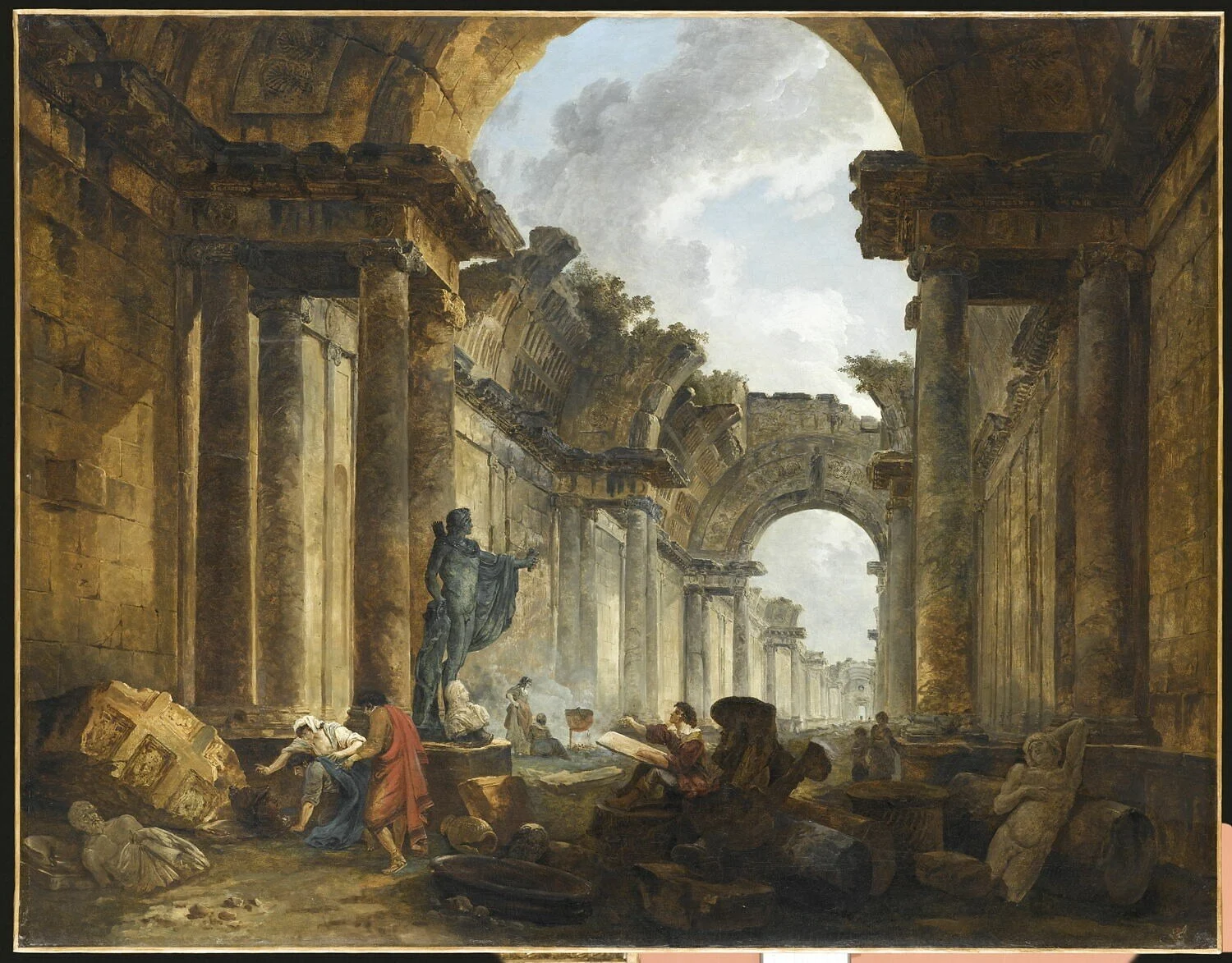
Centuries later the basin in the court is dry. An army is approaching. Wosmlaye has sixty-one scribes, the brick-makers’ carts and eight days. By lamplight she walks the shelves and calls out which books will go.
“I stood in the door, and I chose the Book, in our speech, over the key to our speech.”
The Burning of the House of Life · p. 226, verse 11
The Book of Relations holds the ties between languages. It is too heavy for four people. Wosmlaye saves the books and leaves the means to read them. In her own account, months later, the choice is still open.
Mes’aita I · Book Seven · Giants
The Winter at Susa
“Its maker was not here. I was.”
The king, as Natan remembers him · p. 199, v. 29
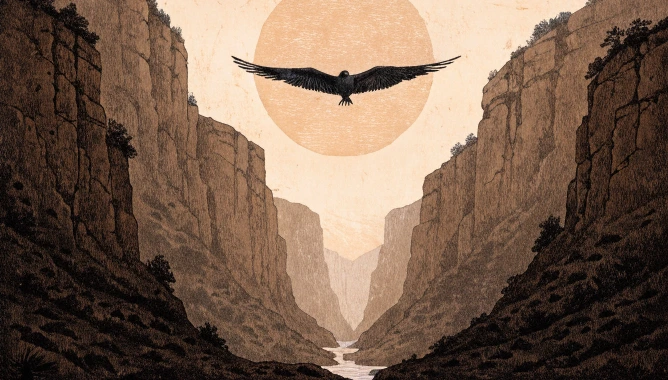
The Shadow in the Gorge
“It comes down the gorge with the sun behind it. And it cannot turn in the gorge.”
The bowman of Jude · p. 280, v. 12
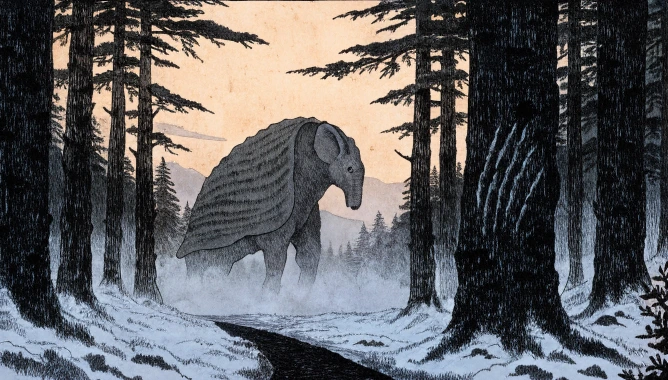
The Cedar Road
“I did not like it. Write that.”
The king, speaking to Masinabal · p. 273, v. 11
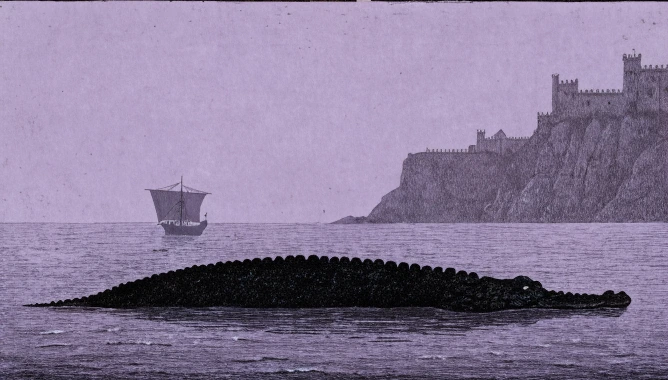
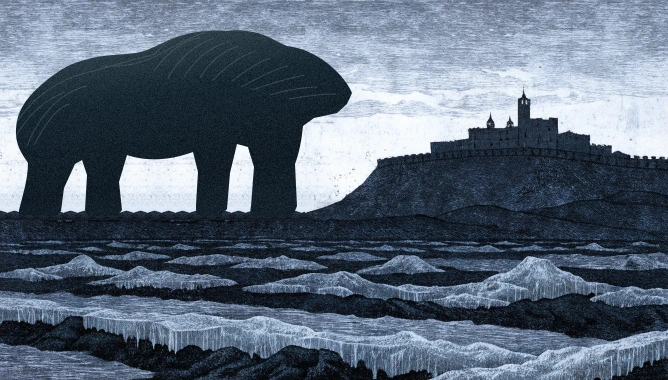
The Beast from the Sea
“the old men of Kyllene, in the compiler’s time, still show a long hollow in the dunes at the north end of the beach, where nothing grows, and call it the bed of the beast that came up out of the sea.”
The compiler · p. 310, v. 32
Cartography · Qadmaita
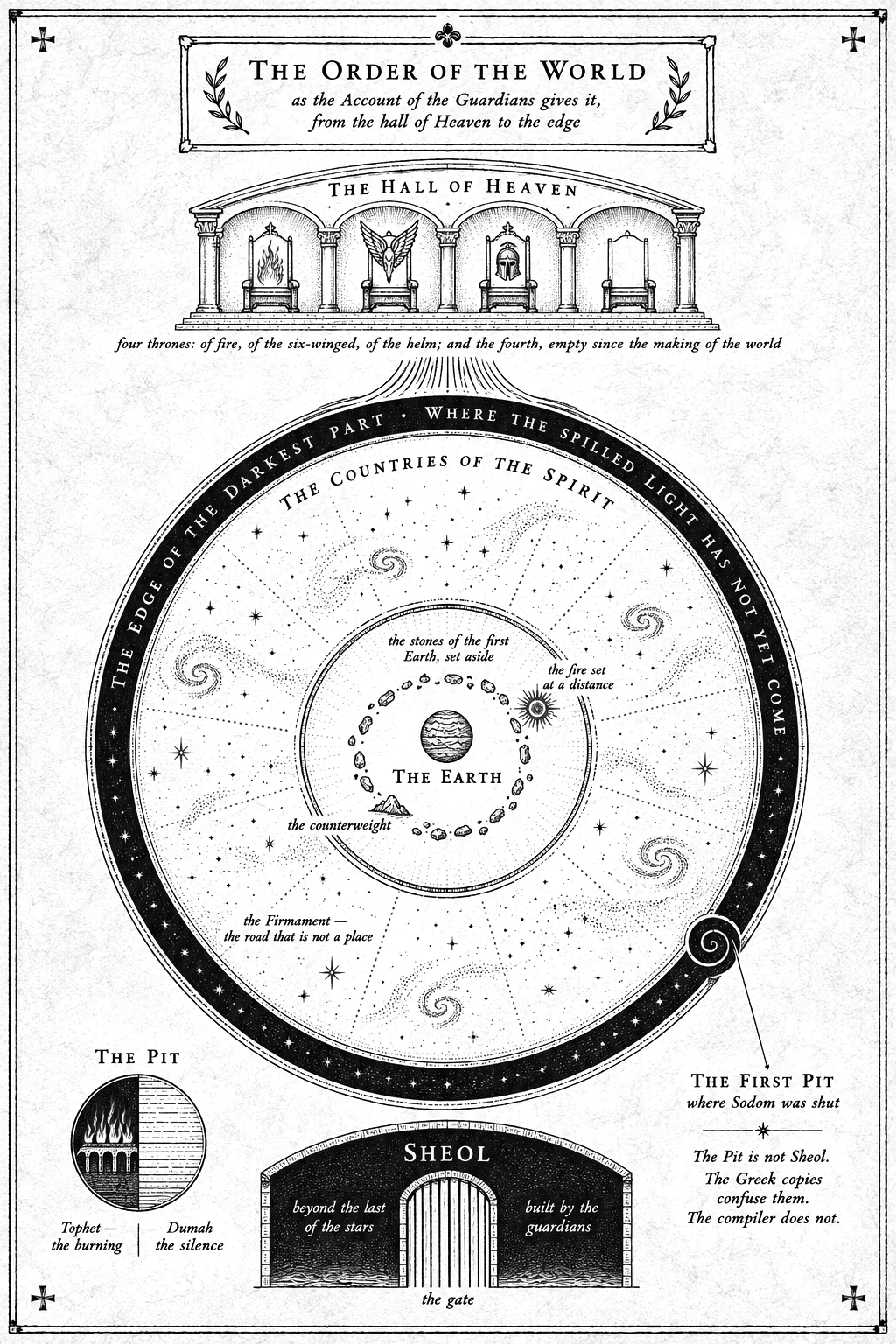
Find the old crossing on the Euphrates, follow the roads to Antioch, or step back to see the order of the world.
From the illustrated editions
The compiler places paintings beside passages they resemble. Follow Enoch to the edge, the king into the cedar country, and the Keepers through the halls of Meroe.
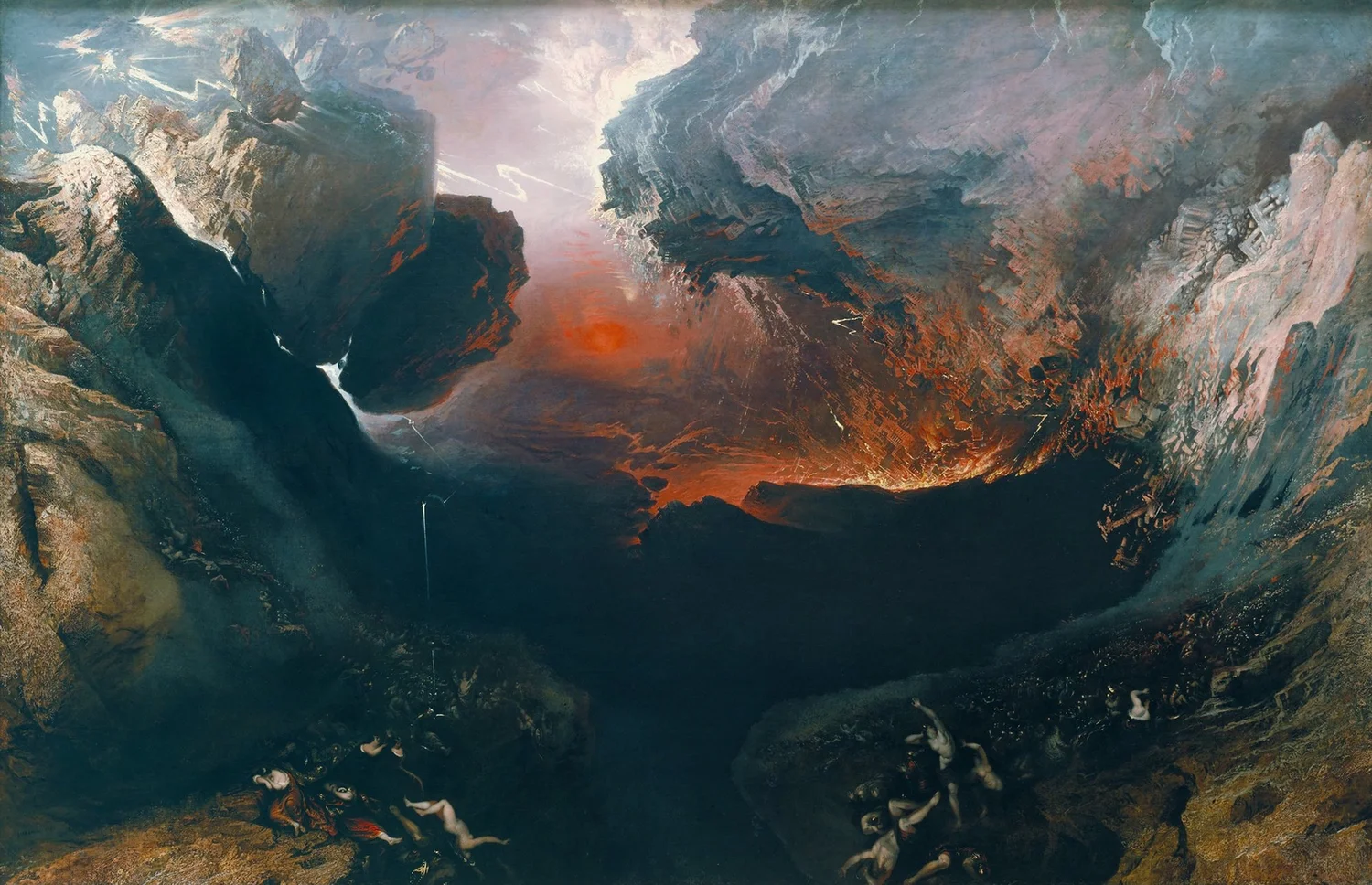
John Martin, 1851–53
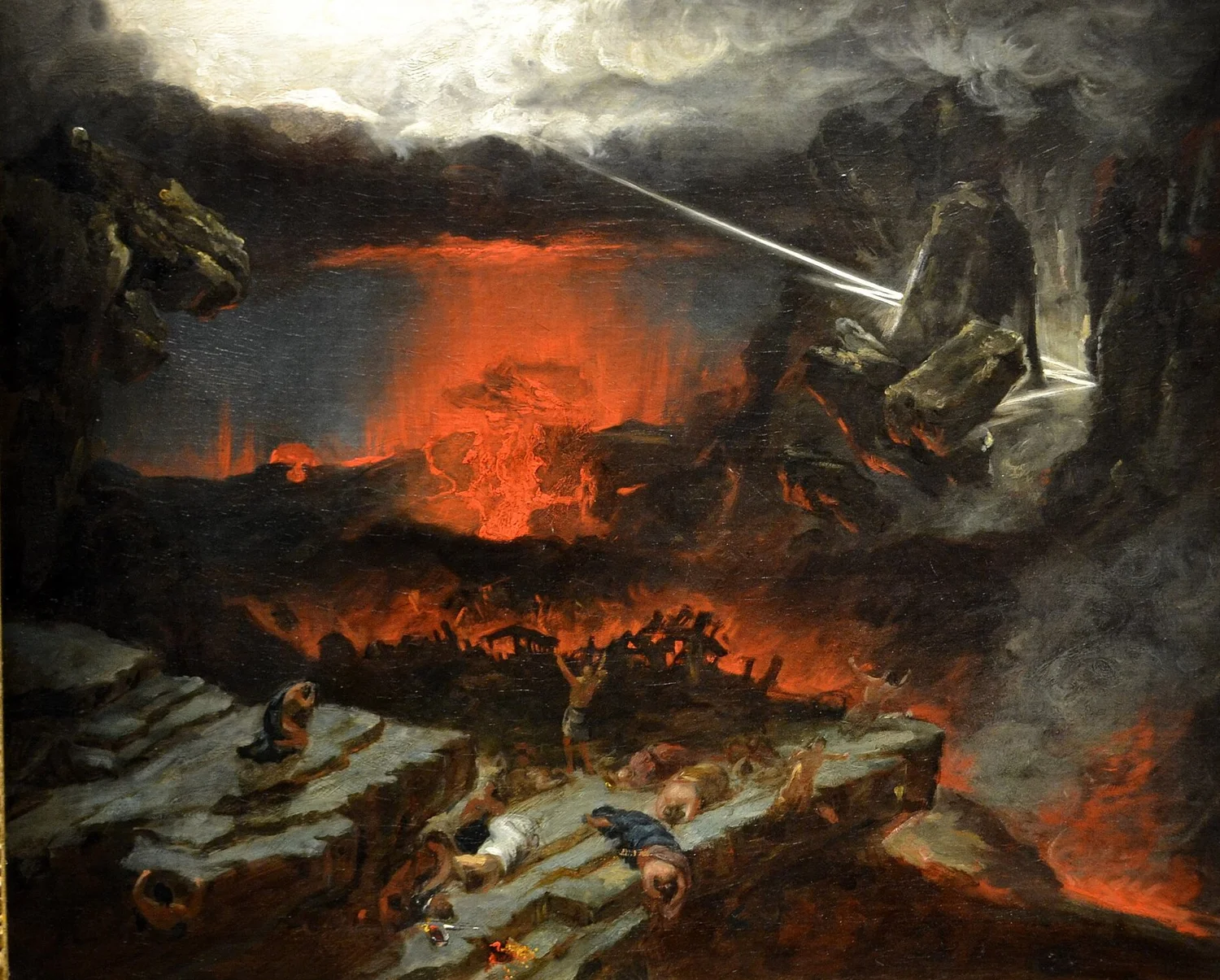
Francis Danby, 1828
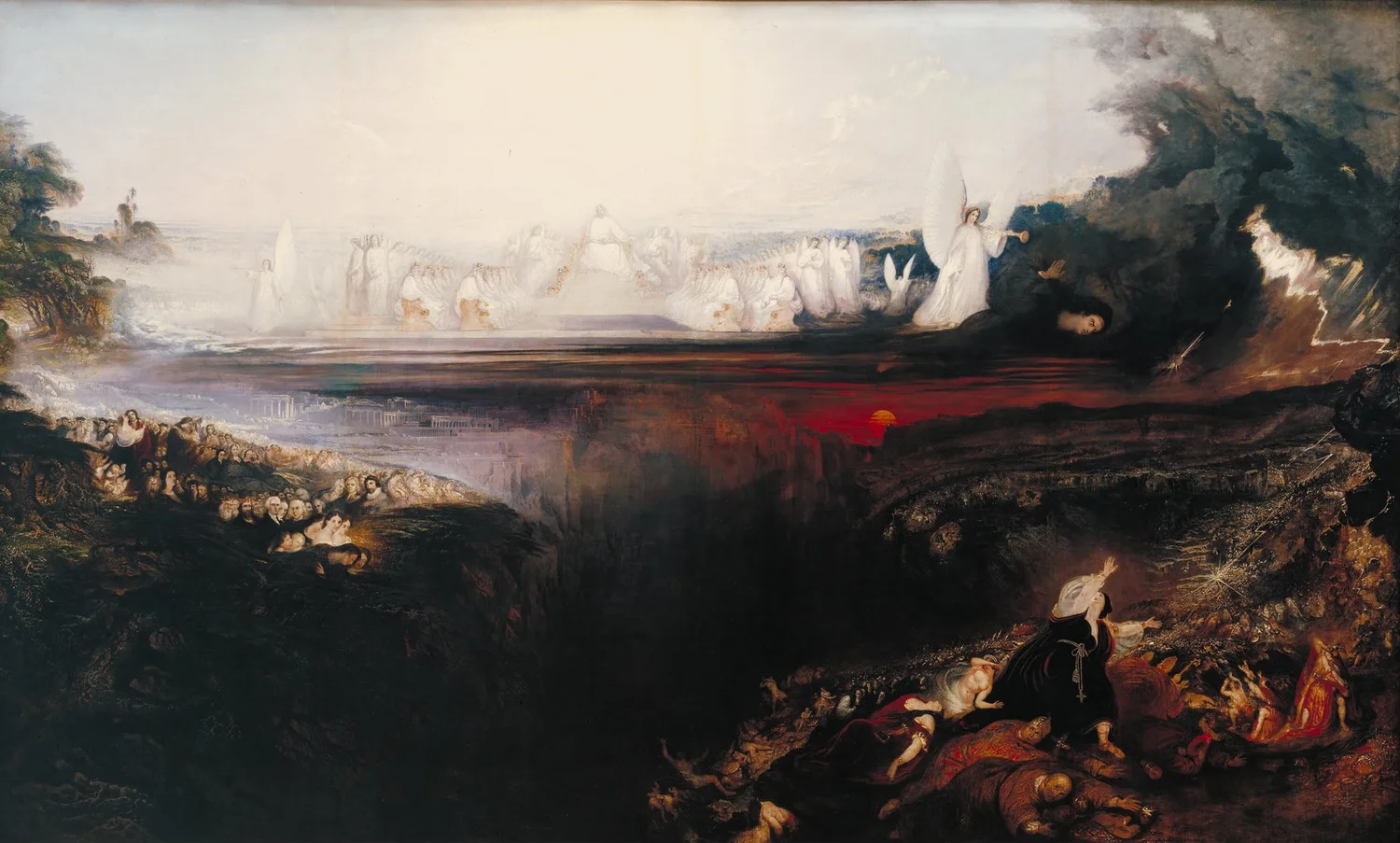
John Martin, 1853
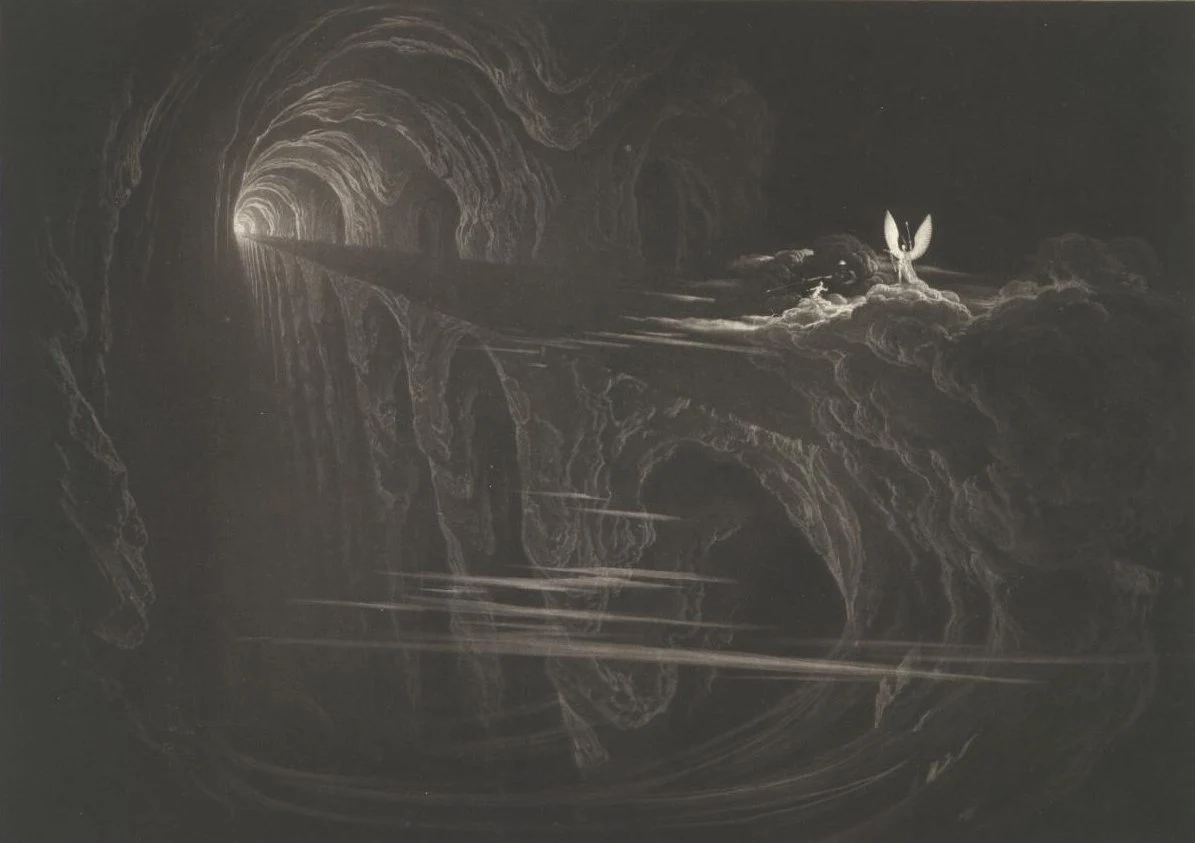
John Martin, 1824–27
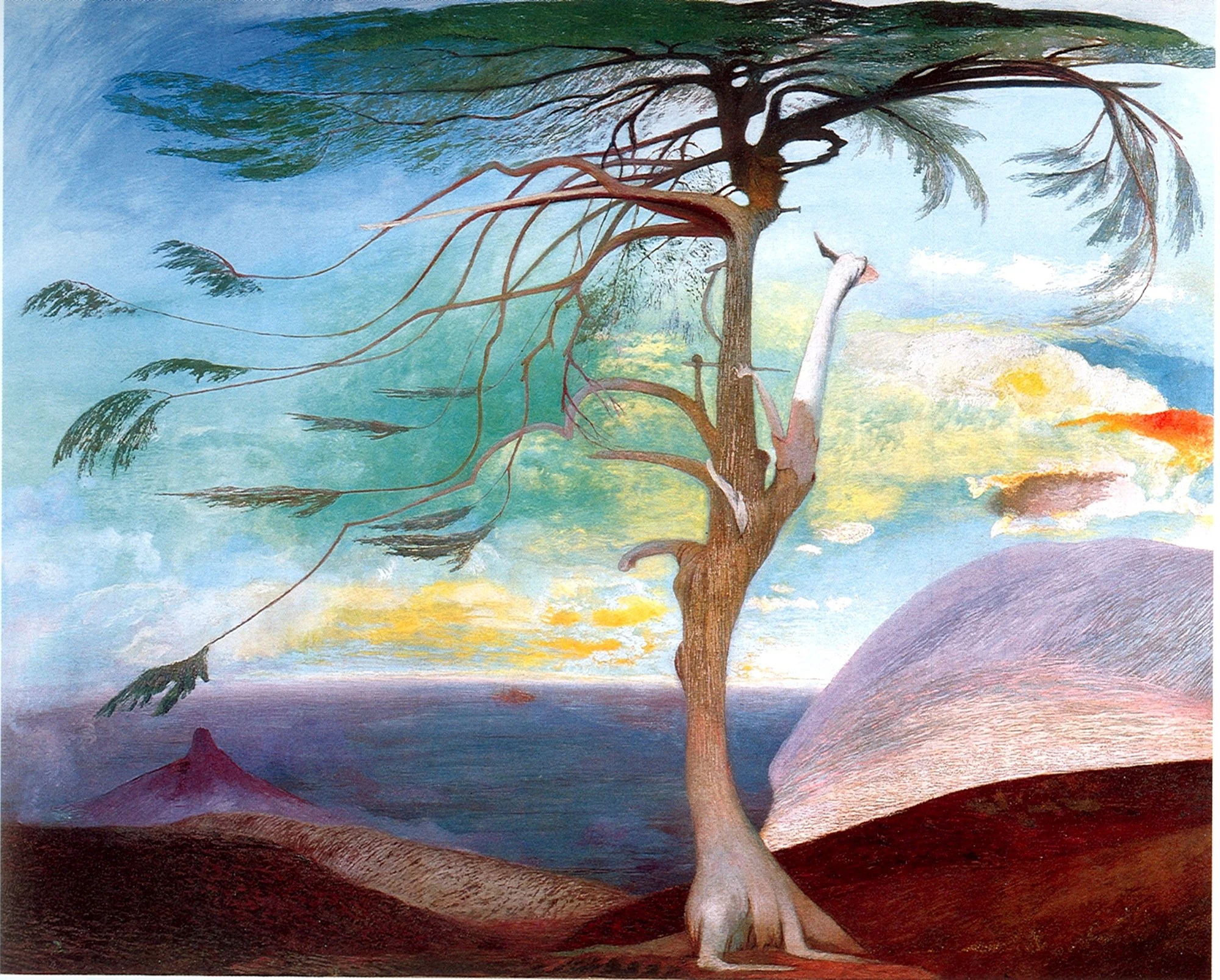
Tivadar Csontváry Kosztka, 1907
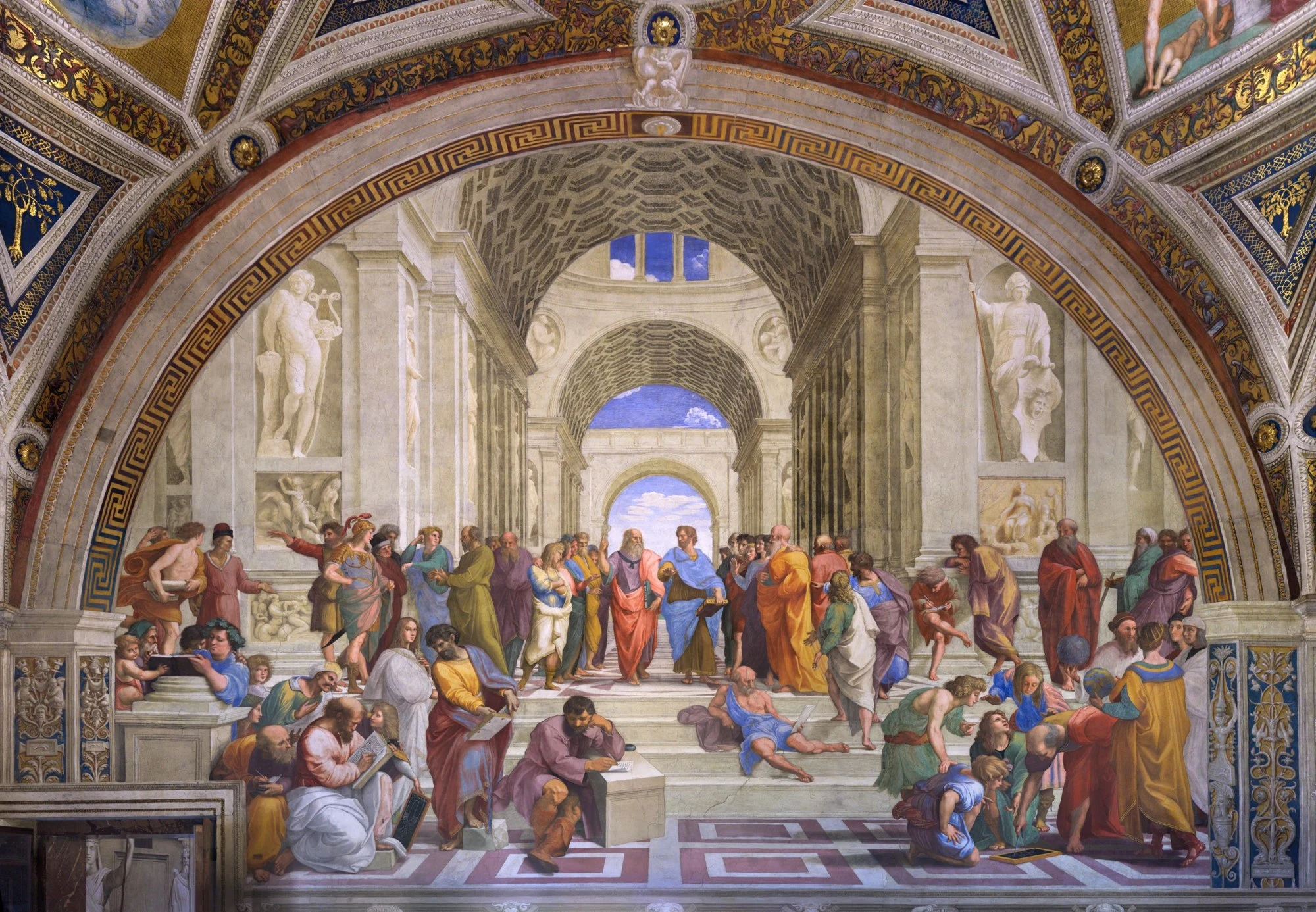
Raphael, 1509–11
Hubert Robert, 1796


